It’s just so memorable. Everything is so memorable. And we have our Helicopter Stories books to keep our memories alive. It’s just so memorable.
Brandon – Year 6
The Need:
In 2017, a group of children started Reception at St Paul’s Primary, Wiltshire, and began a Helicopter Stories journey that stayed with them right the way through primary school. Trisha Lee was working with the class once a week, with the aim of supporting language development, creativity, and to nurture a sense of community by offering children the opportunity to tell their stories and act them out.
The school had recently taken part in Helicopter Stories training and were keen to embed the approach in their Early Years practice. Trisha was also interested in exploring the long-term impact of Helicopter Stories, not just in the moment, but in how it might shape the children’s memory, imagination, and relationship with writing over time.
What They Did:
Trisha Lee continued working with the class from Reception through Year 1 and into Year 2, using Helicopter Stories to build confidence, imagination, and ownership of ideas. The project was originally due to run until the end of Year 2 in July 2020, but was unexpectedly paused in March due to the Covid-19 lockdown. Still, the stories and the memories tied to them, continued to resonate.
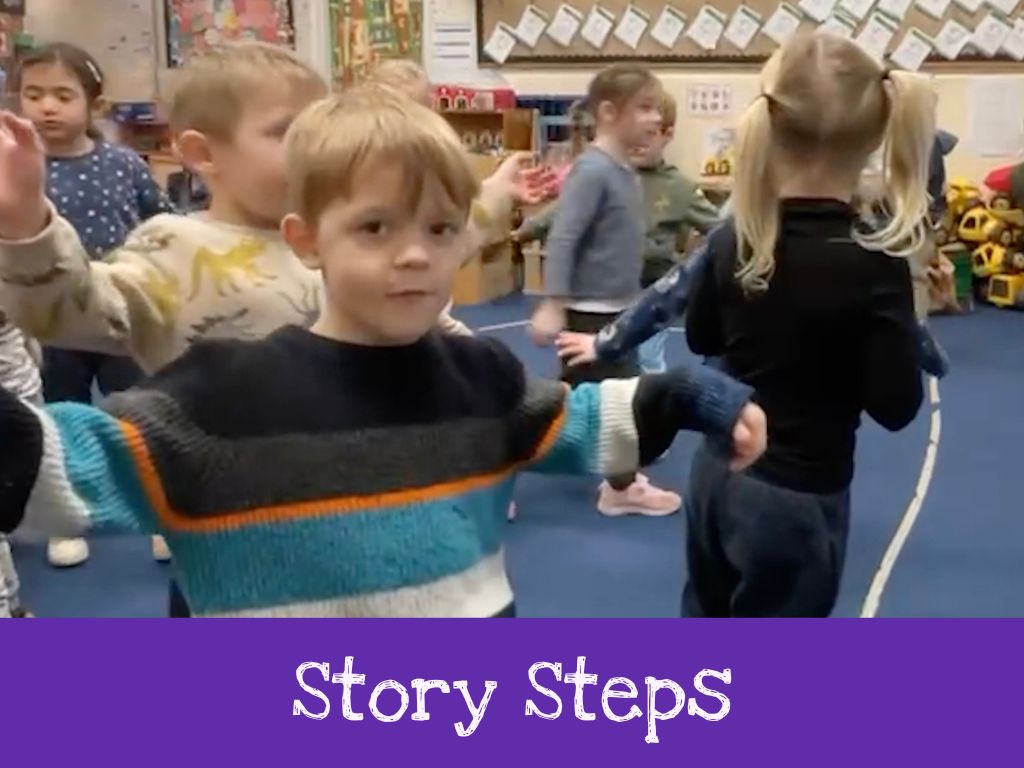
A brief return visit in Year 3 revealed just how lasting those memories were. The children instinctively gathered around the familiar taped-out stage, recalling their stories with humour and affection. They reflected on their early ideas, their handwriting, and the characters they’d created.
Three years later, Trisha revisited the same group in Year 6 for a series of filmed sessions. The children re-read their stories, acted them out, and shared powerful reflections on what Helicopter Stories had meant to them, not just in the early years, but throughout their time at primary school.
The children’s memories were vivid: dragons eating hedgehogs, exploding eggs, runaway trains, and classroom-destroying beasts. They remembered the stories, the friendships, the fun, and how far they’d come.
The Results:
By Year 6, the children remembered Helicopter Stories as a space where they could “just be yourself,” where acting silly was allowed, and where everyone was included, even those they didn’t always get along with. They spoke about imagination, confidence, writing, and friendship.
They understood that telling stories had helped them learn to write, to “make things make sense,” and to bring their ideas to life. They connected it to reading, creativity, and personal growth. “It brings back good memories, good, not bad ones,” said a year 6 boy.
When asked what they would tell their five-year-old selves, their answers were tender, funny, and wise.
“Listen to Helicopter Stories, you’ll get closer with your friends.”
“Keep getting those ideas in your brain.”
“Don’t grow your hair, it will not be good for you.”
One girl ended the session quietly, but with impact:
“Everybody that you’ve done Helicopter Stories with will miss you.”
This was more than a project. It was a childhood threaded with story, a longitudinal journey of voice, growth, and belonging, and a rare chance to witness the growth of a storyteller.